

The ocean floor remains more mysterious than Mars. While we’ve mapped less than 20% of our seafloor, underwater drones equipped with 8K recording capabilities are changing marine exploration faster than ever before. Professional oceanographers, marine biologists, and serious underwater enthusiasts now have access to technology that captures the deep sea in stunning detail—revealing coral formations, marine life behavior, and geological features with unprecedented clarity.
8K recording underwater isn’t just about bragging rights. The 33-megapixel resolution captures fine details that 4K misses: the intricate patterns on a sea turtle’s shell, the translucent structure of deep-sea jellyfish, or the subtle color variations in coral bleaching. For scientists studying marine ecosystems or filmmakers documenting ocean life, this level of detail makes the difference between good footage and groundbreaking discoveries.
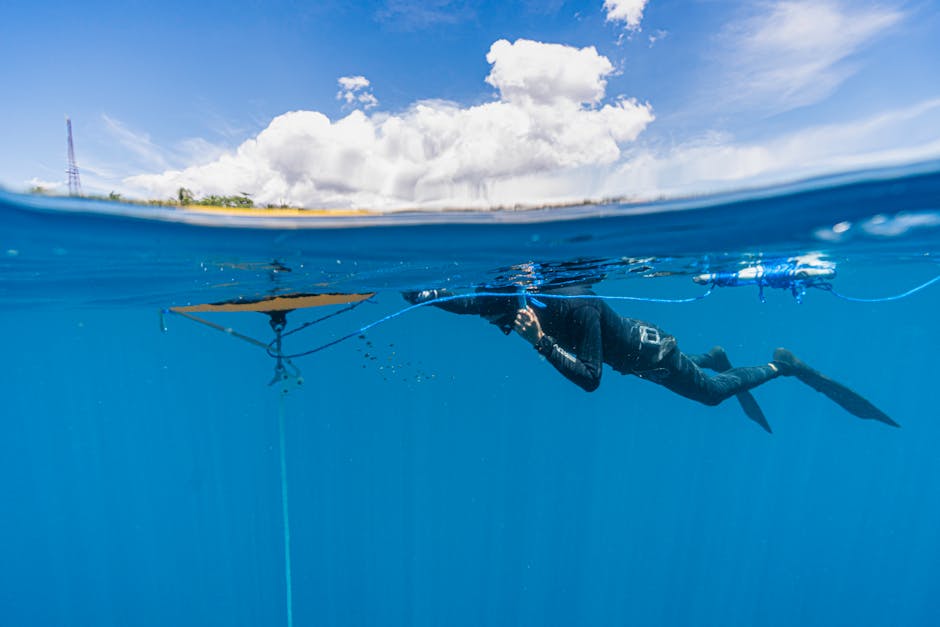
Top 8K Underwater Drones Leading Ocean Exploration
PowerVision PowerEgg X Wizard Marine Edition
PowerVision’s 2026 marine-specific model dominates the prosumer market with its triple-camera system and AI-powered subject tracking. The primary 8K camera shoots at 30fps with a 1-inch sensor, while dual 4K side cameras provide 270-degree coverage. Its waterproof rating extends to 200 feet, making it perfect for coastal exploration and shallow reef documentation.
The standout feature is its Advanced Marine Life Detection system, which automatically identifies and tracks over 500 species of fish, marine mammals, and sea birds. Price sits at $4,299, positioning it between entry-level models and professional-grade equipment. The 45-minute flight time and replaceable battery system make it practical for extended research sessions.
Geneinno Titan Pro 8K
Built specifically for deep-sea applications, the Titan Pro 8K reaches depths of 500 feet—deeper than most competitors. Its pressure-resistant titanium frame houses a custom 8K sensor optimized for low-light underwater conditions. The built-in LED array produces 12,000 lumens, illuminating subjects up to 30 feet away without washing out colors.
What sets the Titan Pro apart is its modular design. Users can swap the standard 8K camera for a thermal imaging sensor, sonar mapping unit, or sample collection arm. At $8,995, it’s expensive but justified for research institutions and professional filmmakers who need versatility and reliability at significant depths.
QYSEA Fifish V-EVO 8K Explorer
QYSEA’s latest iteration combines 8K recording with real-time AI analysis, making it invaluable for marine research. The omnidirectional movement system allows precise positioning in strong currents, while the 6-hour battery life supports extended mapping missions. Its 8K camera captures footage at 60fps, crucial for studying fast-moving marine life.
The Explorer’s real strength lies in its software ecosystem. The companion app processes footage in real-time, identifying species, measuring coral health, and creating detailed underwater maps. Research teams can upload findings directly to marine databases, streamlining the scientific process. Priced at $6,799, it bridges the gap between consumer and research-grade equipment.
Key Technical Considerations for Deep-Sea 8K Recording
Sensor Performance in Low Light
Underwater 8K recording faces unique challenges that don’t exist in aerial photography. Light penetration decreases exponentially with depth—red wavelengths disappear within 15 feet, while blues remain visible to 200 feet. The best underwater 8K drones use larger sensors (1-inch or bigger) with enhanced sensitivity to capture usable footage in minimal light conditions.
Look for drones with adjustable ISO ranges extending to 12,800 or higher. The Geneinno Titan Pro excels here, maintaining clean 8K footage at ISO 6400 thanks to its custom low-noise sensor design. Cheaper models often produce unusable footage beyond 100 feet depth due to inadequate sensor performance.
Color Correction and White Balance
Water absorbs colors differently than air, creating a blue-green tint that intensifies with depth. Professional underwater 8K drones include automatic color correction algorithms specifically tuned for marine environments. The PowerEgg X Wizard’s “Deep Sea” color profile compensates for color loss in real-time, producing naturally colored footage without extensive post-processing.
Advanced models like the Fifish V-EVO offer customizable white balance presets for different water conditions—from crystal-clear tropical waters to murky coastal environments. This feature saves hours of color grading work and ensures consistent footage quality across varying conditions.
Stabilization and Current Resistance
Ocean currents create challenges that aerial drones never face. Underwater 8K recording requires rock-steady stabilization to maintain sharp footage, especially when tracking moving subjects. The latest underwater drones use 6-axis gimbal stabilization combined with AI-powered positioning systems that predict and compensate for water movement.
Thruster configuration matters significantly. The Fifish V-EVO’s omnidirectional design allows precise movement in any direction, essential for maintaining position while recording. Traditional propeller-driven models struggle in strong currents, often producing shaky footage despite electronic stabilization.
Professional Applications and Research Impact
Marine research institutions increasingly rely on 8K underwater drones for biodiversity surveys and climate change documentation. The Scripps Institution of Oceanography uses modified Titan Pro units to monitor coral bleaching events, with 8K resolution revealing subtle color changes that indicate early stress signs before visible bleaching occurs.
Commercial applications are expanding rapidly. Netflix’s “Our Planet II” documentary series extensively used 8K underwater drones, capturing never-before-seen behaviors of deep-sea creatures. The ability to record for hours without human presence allows observation of natural behaviors impossible with traditional diving methods.
Archaeological applications show similar promise. Underwater archaeology teams use 8K drones to create detailed photogrammetric models of shipwrecks, with resolution sufficient to identify individual artifacts without physical excavation. This non-invasive approach preserves sites while enabling detailed study.
Making the Right Choice for Your Ocean Exploration Needs
For serious marine enthusiasts and entry-level research, the PowerEgg X Wizard Marine Edition offers the best balance of capabilities and price. Its user-friendly interface and comprehensive feature set make 8K underwater recording accessible without requiring extensive technical expertise.
Research institutions and professional filmmakers should consider the Geneinno Titan Pro 8K for its superior depth rating and modular design. While expensive, its durability and specialized features justify the investment for demanding applications.
The QYSEA Fifish V-EVO 8K Explorer represents the future of underwater research, combining advanced recording capabilities with AI-powered analysis. It’s ideal for teams prioritizing data collection and scientific documentation alongside high-quality footage.
Regardless of choice, ensure your underwater 8K drone includes robust depth rating for your intended use, adequate battery life for your missions, and compatible software ecosystems for your workflow. The ocean’s mysteries await—choose the tool that matches your exploration ambitions.